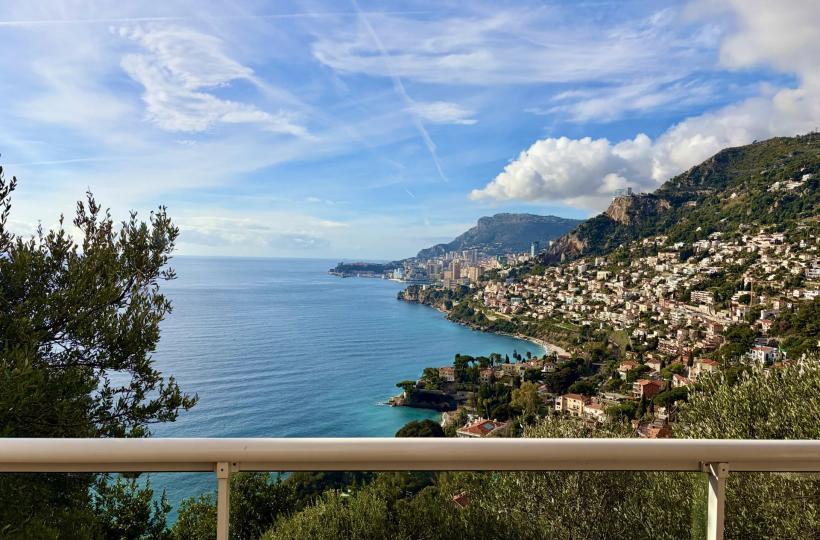
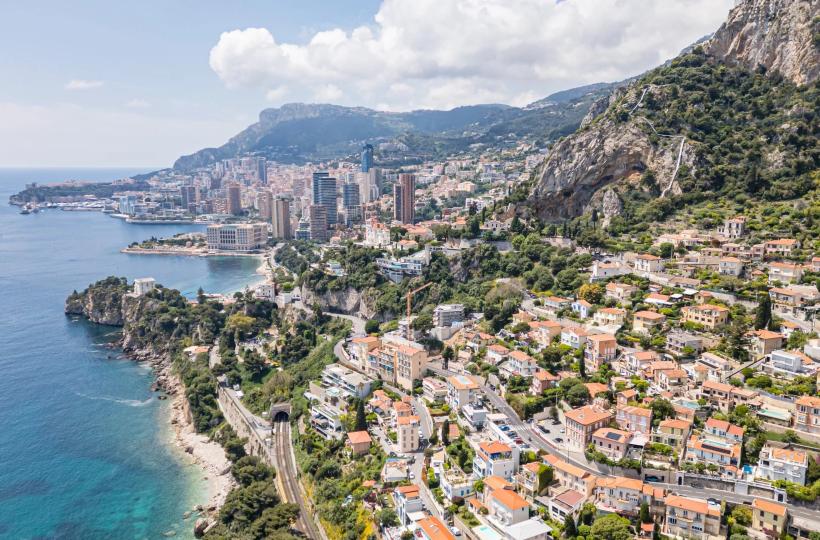
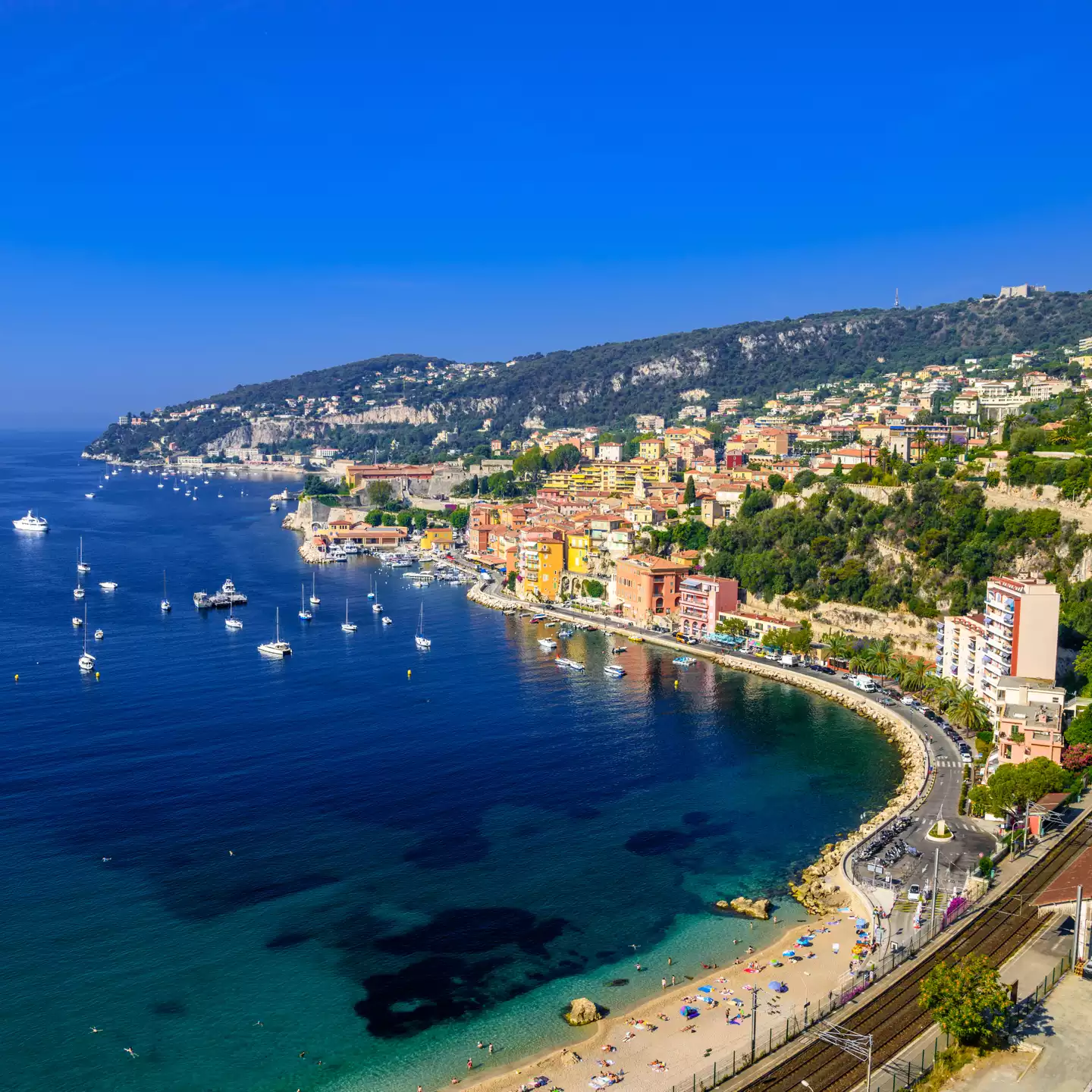
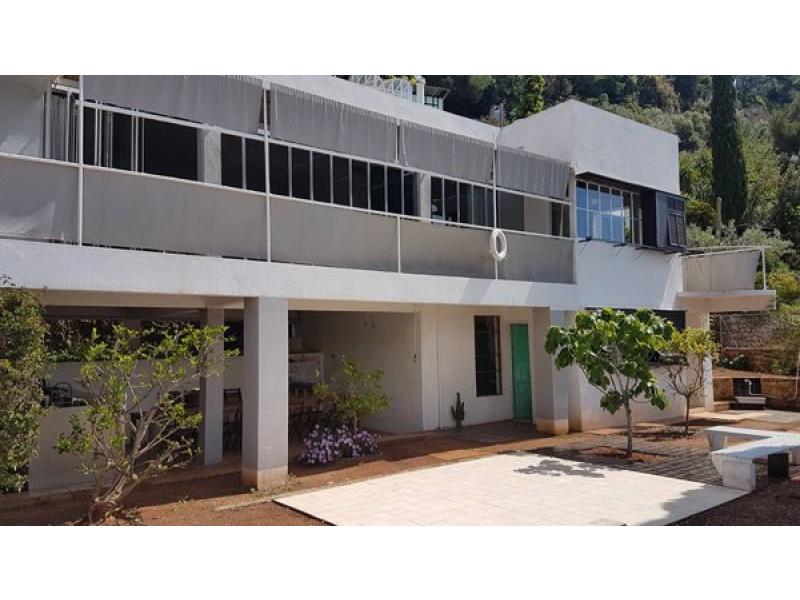
A symbol of the Mediterranean lifestyle of the 1950s, Villa E-1027 blends seamlessly into the coastal vegetation along the Roquebrune-Cap-Martin path. Fully renovated in keeping with the vision of its designer, Eileen Gray, this modernist house—neighboring Le Corbusier’s cabin—embodies the aesthetics of the Modern Movement of the 1920s. Conceived as a living organism, its decorative elements, furniture, and spaces interact harmoniously with one another and with nature. A unique world to discover on sunny days along the French Riviera.
Eileen Gray: a major figure in design and architecture
A renowned Art Deco designer in Paris, Eileen Gray gradually developed an interest in progressive artistic movements. Alongside her partner, architect and art critic Jean Badovici, she discovered the first modern architectural projects, notably those of Le Corbusier, who would collaborate a few years later on the decoration of Villa E-1027. A pioneer of 20th-century design, this eminent figure initially focused on arts and crafts, decoration, and interior design before turning to architecture. Villa E-1027 stands as the purest and most accomplished expression of her architectural vision.
New contemporary villa with panoramic views over the Principality
Superb 160 sqm apartment with panoramic views over the Principality.
Beautiful architect-designed villa with panoramic sea views
New villa with flat garden and panoramic sea view
Beautiful contemporary villa with panoramic sea view
Duplex apartment with sea view. Roquebrune Cap Martin
Studio with sea view. Roquebrune Cap Martin
Outstanding Niçois-Style Property with Panoramic Sea Views, Renovation Opportunity
Having embraced a pared-down decorative vocabulary, Eileen Gray designed a light-filled house with fluid, ambivalent spaces on the natural site of Roquebrune-Cap-Martin. She also conceived elegant, functional, custom-made furniture inseparable from the building itself and from the living spaces, each of which opens onto nature through large bay windows.
The name E-1027 is derived from a code combining the initials of its two creators: E for Eileen, 10 for the letter J in Jean, 2 for the B in Badovici, and 7 for the G in Gray.
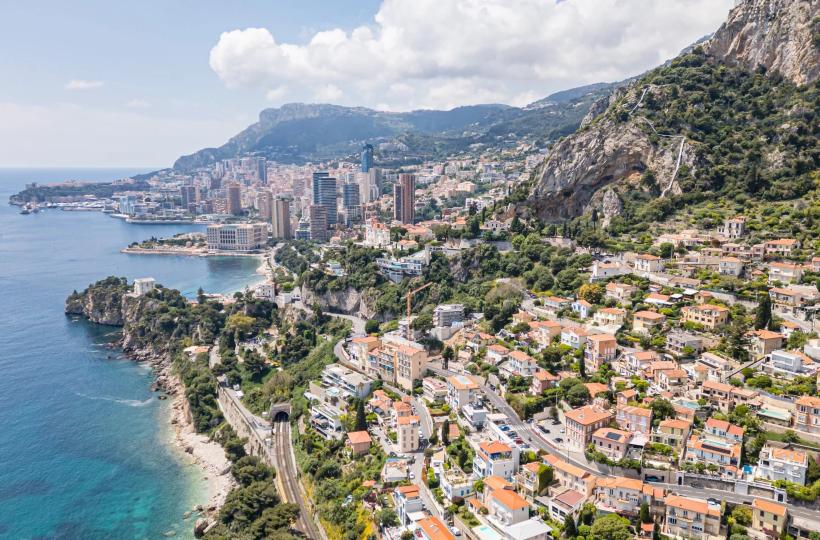
Built on terraced land where cypress and palm trees dominate the horizon, this immaculate cocoon emerging from the vegetation is accessible only from the path that runs alongside the railway line, just a stone’s throw from the Mediterranean Sea shimmering below.
Raised on stilts, this bastion of modern, L-shaped architecture unfolds over two levels with a total surface area of 120 m². The living spaces balance autonomy and intimacy in a boldly avant-garde composition.
An expert in furniture and interior design, Eileen Gray expressed her artistic sensibility within the villa through ingenious, modular, and versatile creations. She experimented with industrial materials such as glass, metal, tubular steel, and celluloid to design lighting, tables, and chairs.
Perfectly integrated into the architecture, the furniture is finished in Bakelite or painted plywood, reinforcing the unity between structure and function. This bold design approach continues to inspire contemporary artists, designers, and architects.
The relationship between Le Corbusier and Eileen Gray oscillated between admiration, rivalry, and jealousy. Gray’s masterpiece became an obsession for Le Corbusier, who, after her departure, painted murals inside the villa without her consent.
Drawn by the exceptional light of the French Riviera and his taste for simple living, he had his Cabanon built in 1952. The plot of land was obtained in exchange for constructing camping units on the terraced slope overlooking the villa.
Today, the Étoile de Mer, the Cabanon, the camping units, and Villa E-1027—powerful testimonies to the popular Mediterranean lifestyle of the 1950s—have been brought together under the Cap Moderne association. Since 2014, its mission has been to preserve these gems of the Côte d’Azur’s modern architectural heritage.
Historic villa on the French Riviera