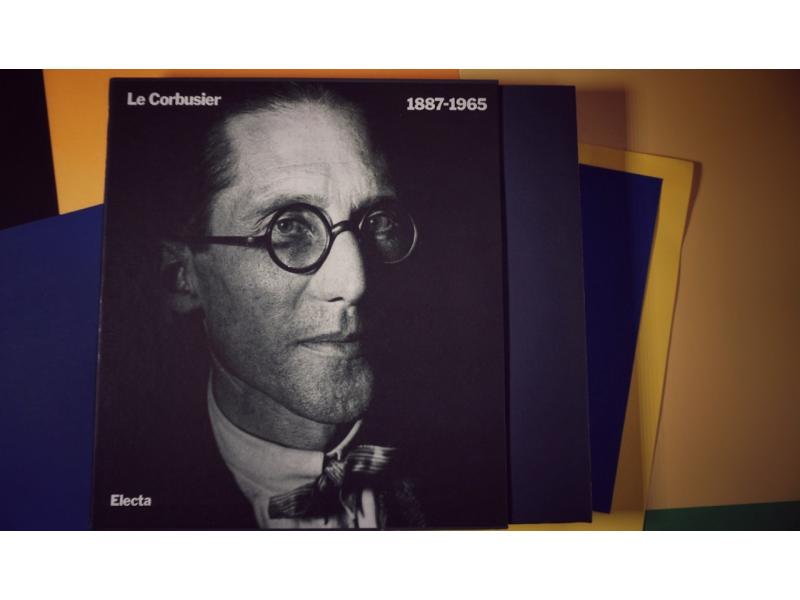
Undeniably inspired by the concept of the “house of the outdoors,” explored by researchers such as Jean-Lucien Bonillo and Bruno Chiambretto, Le Corbusier—who had an unconditional love for the Mediterranean, its light, and its rugged landscapes—designed the Cabanon strictly according to the principles of the Modulor. He anchored this wooden structure in architectural history through a singular synthesis: the myth of the trapper’s cabin combined with the functionalism championed by modernist architects.
In harmony with the wild surroundings—where fig trees, agaves, and yuccas cascade down the slope toward the sea—the Cabanon consists of a single cubic volume clad in pine bark. Le Corbusier himself famously remarked:
“I have a castle on the French Riviera that measures 3.66 meters by 3.66 meters. It is for my wife; it is extravagant in comfort and kindness.”
Despite its compact dimensions, the space ingeniously incorporates a work area, a resting corner, a toilet, a washbasin, a table, storage, and a coat rack. The interior layout, combining oak and chestnut furniture, blends seamlessly with the painted walls. Natural light, the presence of a carob tree seemingly integrated into the structure, and the perfectly calibrated functionality of the interior contributed to the classification of this extraordinary architectural jewel as a historic monument in 1966.
Conceived as a prototype for serial production, this functional cabin inspired two identical models produced by Cassina, which are now regularly exhibited around the world.
Le Corbusier’s obsession and Villa E-1027
Le Corbusier’s fixation on Villa E-1027 is inseparable from the story of the villa itself, designed by Eileen Gray and her partner Jean Badovici. Invited by Badovici, Le Corbusier stayed there for the first time in 1938. The sculptural, immaculate white residence deeply impressed him, to the point that he returned every summer.
Without Eileen Gray’s consent, he painted several polychrome murals on the villa’s walls—an act she regarded as vandalism. This obsession with E-1027 proved decisive in the creation of Le Corbusier’s Cabanon, which he installed just steps away, overlooking the Mediterranean, in order—quite literally—to keep watch over the site from its commanding viewpoint.
Cap Moderne: preserving architectural heritage
Le Corbusier’s Cabanon and Villa E-1027—two avant-garde structures standing sentinel over the Mediterranean—are now preserved under the aegis of Cap Moderne, an association dedicated to safeguarding this exceptional site. Together with the bar-restaurant L’Étoile de Mer and the five Camping Units designed by Le Corbusier in exchange for the Cabanon plot, they form a unique ensemble.
Today, the site functions as an open-air museum. On sunny days, visitors can explore these masterpieces of modern architecture, enduring testimonies to the creative microcosm and Mediterranean art of living of the 1950s—still a powerful source of inspiration for designers and architects worldwide.
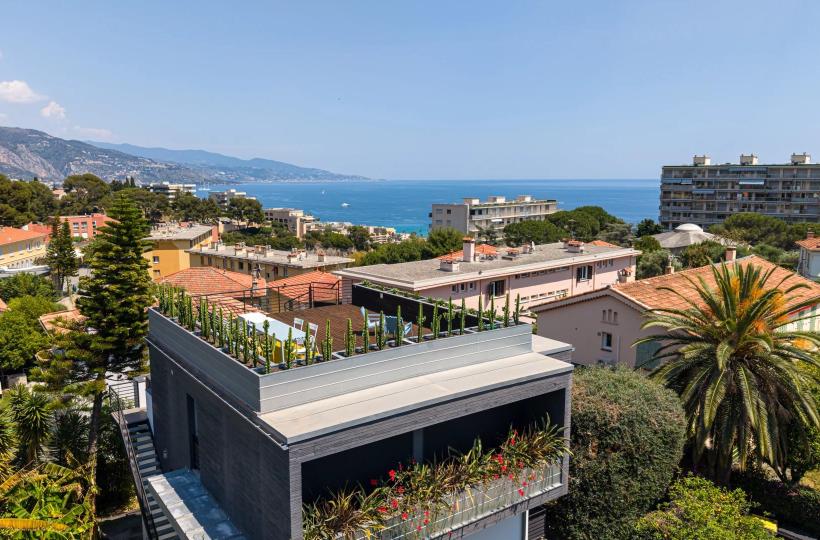
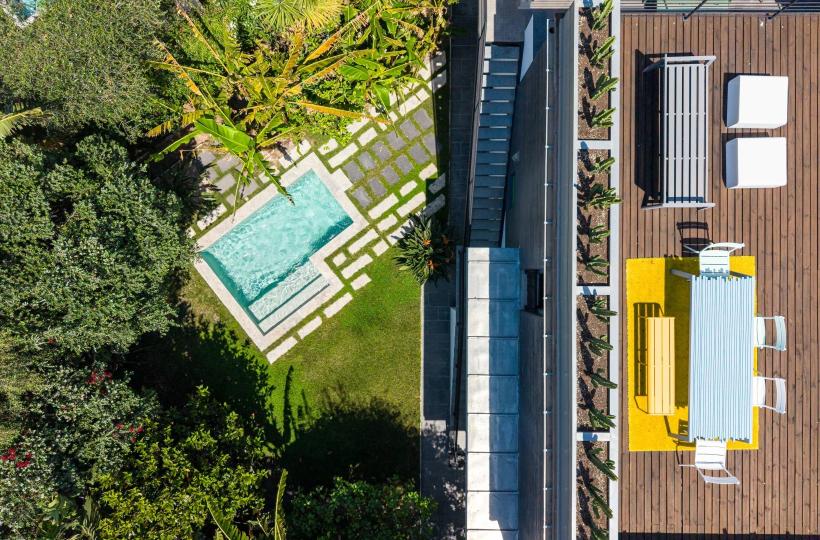
Historic villa on the French Riviera