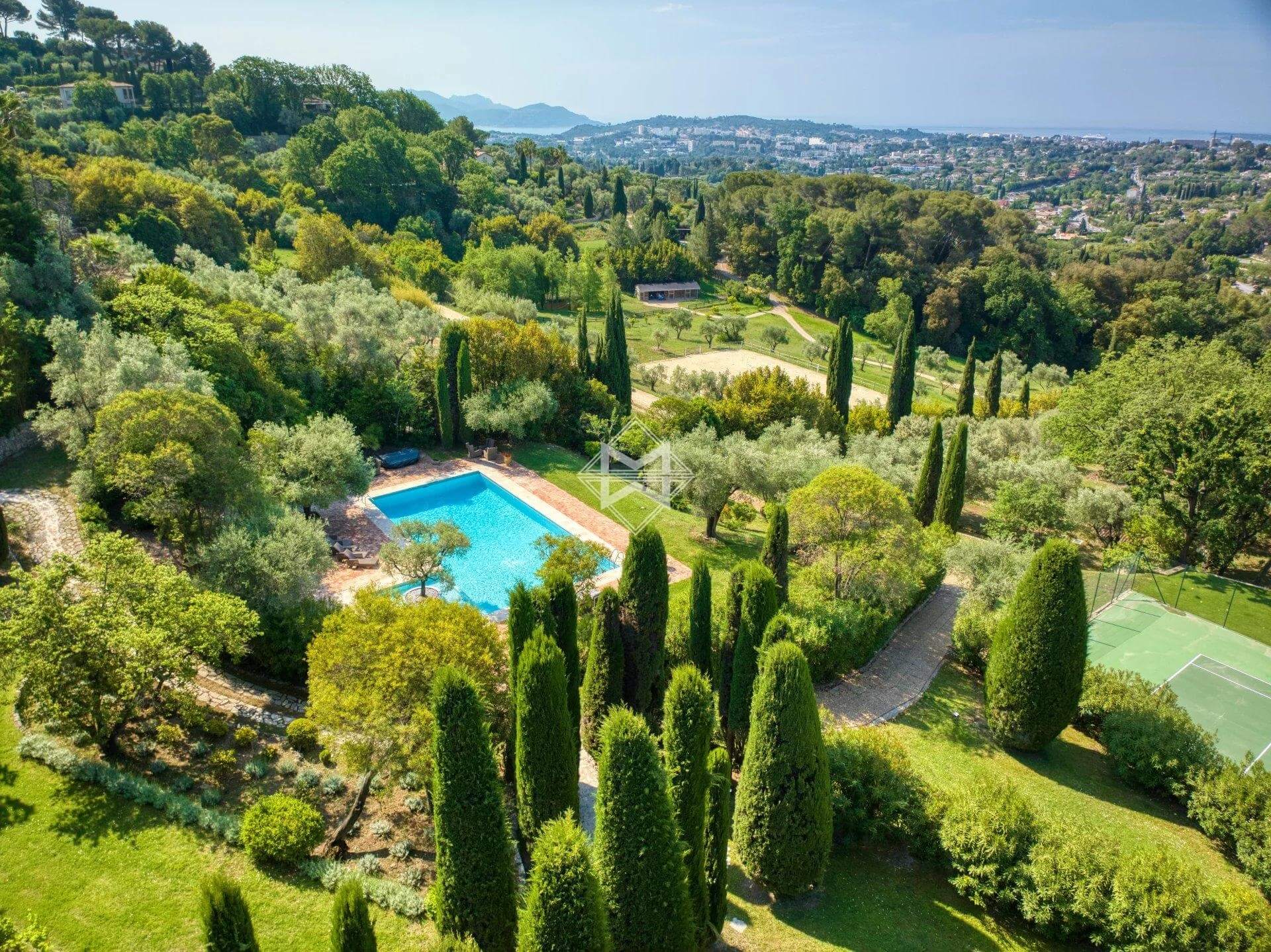
French real estate taxation, often criticized, is actually competitive. Acquisition costs and taxes on capital gains or rental income are more advantageous than in many neighboring countries. Wealth tax, although present, remains limited and flexible, unlike the stricter thresholds in Switzerland, the United States, or Spain.
Investment conditions are favorable. Low interest rates make financing accessible. Prices for high-end real estate have also fallen, offering attractive opportunities. The French Riviera, with its festive atmosphere and unique landscapes, remains a favorite destination for buyers.
Moderate taxation, attractive financing, and an idyllic setting make France, and the French Riviera in particular, an excellent choice for investment. Take advantage of these benefits to discover the best properties.

First, let's dispel the preconceived notion that France is not fiscally attractive.
It is essential here to briefly compare French tax rules with those of our neighbors, to conclude that the grass is not so green elsewhere.
Acquisition costs amount to around 7% of the purchase price, including taxes and notary fees. Our Italian neighbors apply a tax of between 10% and 15% of the purchase price to non-resident buyers. Similarly, our English neighbors apply a tax of 12% of the purchase price for properties worth more than £1,500,000, to which is added the fees of the lawyer handling the transaction, ranging from 0.5% to 1% of the purchase price. Let's take another example from our Spanish neighbors, who apply a tax of between 8% and 11% of the purchase price, to which is added a flat-rate tax of between €3,000 and €6,000.
When it comes to capital gains tax on real estate in the event of resale, France is also far from being the most restrictive. It uses a complex system that only taxes second homes, with a rate of 34.5% for French residents and 19% for non-residents, but with an extremely low taxable base (actual or flat-rate allowance of 7.5% for acquisition costs, actual or flat-rate allowance of 15% for renovation work, allowance for length of ownership reaching total exemption after 22 years for non-residents and 30 years for residents). Whereas Geneva applies a 50% sliding scale to reach total exemption after 25 years of ownership, the United Kingdom applies a rate of 28% for any capital gains above £32,010, Florida applies a rate of 15% with a tax base increased on all sides, etc.
Taxation on rental income is also quite moderate when compared to the tax systems adopted by many of our neighbors. It should be noted that while France applies a minimum rate of 35.5% for non-residents, the taxable base can be reduced significantly through the deduction of numerous expenses. By way of comparison, Italy caps deductible expenses at 15% of the amount of rent, Florida effectively taxes rental income for non-residents at a minimum rate of 30%, and Spain and Switzerland levy tax on rental income even if the properties are not rented out.
The same applies to the issue of French wealth tax, which is the subject of much debate but must be put into perspective when compared with other countries' models. It applies to individuals with net assets exceeding €1.3 million, with a maximum rate of 1.5% for assets above €10 million, and, above all, with numerous strategies available to reduce or eliminate the tax. In contrast, the threshold for wealth tax is €1 in Switzerland, €1 for real estate in the United States (the property tax rate varies from state to state, reaching 2% in Florida, for example), and €700,000 in Spain.
France is therefore a victim of its unfounded reputation, and has nothing to envy in terms of taxation compared to many other countries.
In addition to this moderate taxation, historically low interest rates are opening the doors to financing for savvy buyers. Taking on debt to purchase a prestigious property has never been so financially attractive.
This is especially true given that prices for high-end properties, like the real estate market as a whole, have fallen significantly. This has been noted by experienced real estate agents and confirmed by notaries when authenticating deeds of sale.
The French Riviera, from Saint-Tropez to Monaco, remains one of the most sought-after destinations in the world, with its festive towns (Saint-Tropez, Cannes, Monaco, etc.), picturesque towns and villages (Mougins, Eze, Ramatuelle, etc.) and enchanting settings (Théoule-sur-Mer, Saint-Jean-Cap-Ferrat, Agay, Cap d'Ail, etc.).
A tax haven, a financing haven, a price haven, a location haven...
All the signs are green, and it has rarely been so opportune to invest in France. Please do not hesitate to contact us. We will be happy to show you a wide range of the most beautiful properties on the French Riviera.